

What Rental Agencies Won’t Tell You About Hiring a Driver in Uganda.
Car rent with a driver in Uganda is one of the most convenient ways to explore the country, whether you are visiting for a wildlife safari, a business trip, a family holiday, or an airport transfer. With a professional driver behind the wheel, you can travel between destinations, enjoy the scenery, and focus on your journey without worrying about unfamiliar roads, navigation, or the challenges of driving in Uganda.
At Best Car Rent Uganda, we believe that booking a rental car should be about more than finding the lowest advertised price. You should understand what your rental package includes, which vehicle suits your itinerary, how driver accommodation is handled, and what your insurance policy covers before making a payment.
In this comprehensive guide, we explain everything you need to know about hiring a car with a driver in Uganda, including vehicle options, indicative rental rates, fuel arrangements, hidden costs, insurance considerations, traffic fines, driver expectations, and practical booking tips.
Whether you need a car with a driver in Kampala, an Entebbe Airport transfer, or a reliable safari vehicle for exploring Uganda’s national parks, this guide will help you make an informed decision.
What Is Car Rent With a Driver in Uganda?
Car rent with a driver in Uganda is a vehicle rental service that combines a rental vehicle with a professional driver. Instead of driving yourself, you hire a car and have an assigned driver take you to your destinations according to your agreed itinerary.
This service is particularly useful for international visitors, business travellers, families, and tourists planning journeys beyond Uganda’s major towns.
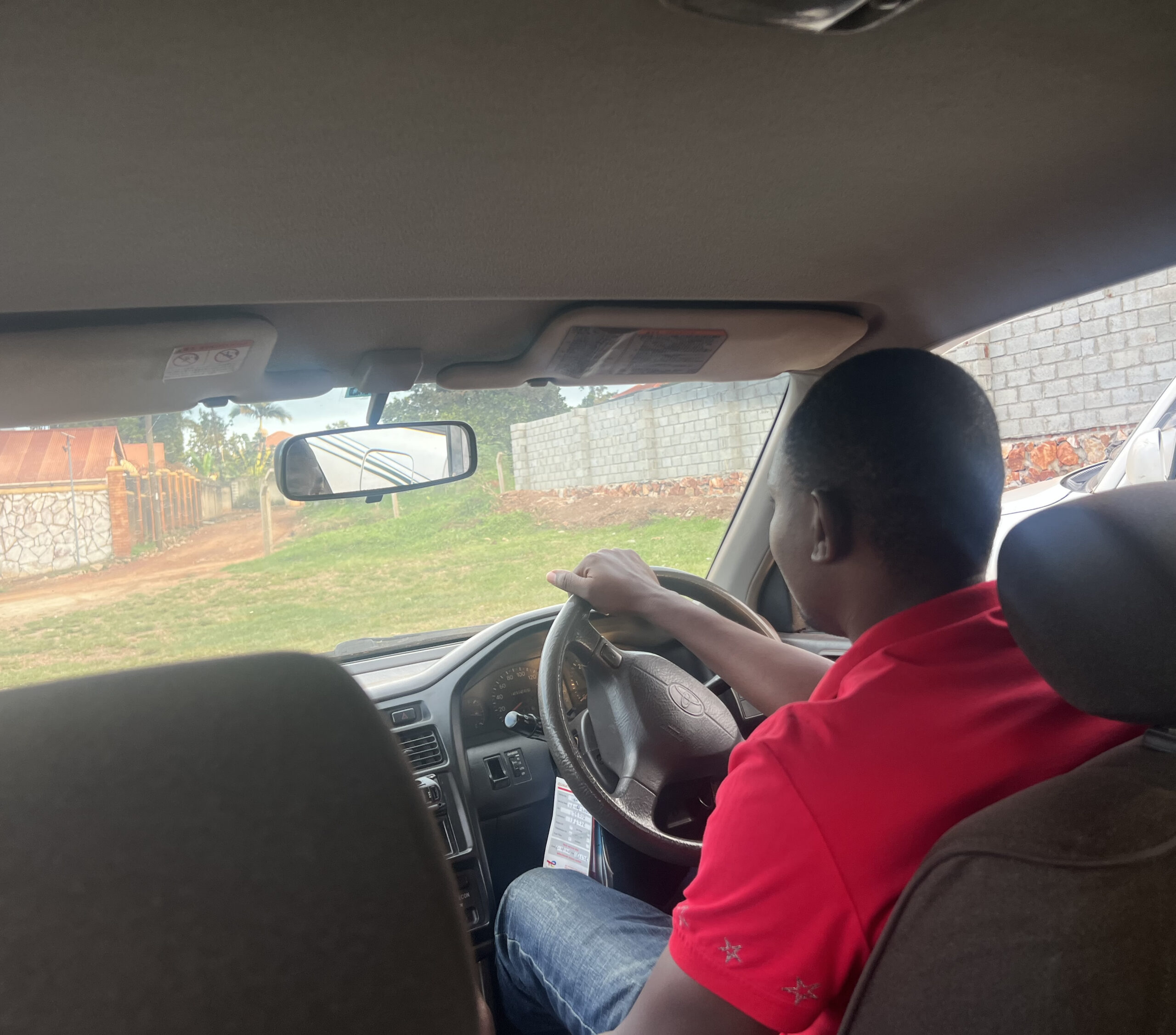
Depending on your requirements, you can hire a vehicle with a driver for a few hours, a full day, several days, or an extended safari.
Common uses include:
- Airport transfers between Entebbe International Airport, Kampala, and nearby destinations.
- Business meetings, conferences, and corporate travel.
- City transfers and daily transportation around Kampala.
- Wildlife safaris to Queen Elizabeth National Park, Murchison Falls National Park, Bwindi Impenetrable National Park, and other protected areas.
- Gorilla trekking and chimpanzee trekking trips.
- Family holidays and private guided road trips.
- Weddings, special occasions, and executive transportation.
- Long-distance travel between towns and districts.
When comparing car rental companies in Uganda, confirm whether the quoted price covers only transportation or includes additional services such as a driver-guide, fuel, parking, accommodation, and park-related vehicle charges.
Understanding these details will help you choose a package that matches your budget and travel plans.
Car Rent With a Driver vs Self-Drive Car Rental in Uganda
One of the first decisions you need to make when arranging transportation in Uganda is whether to hire a self-drive vehicle or rent a car with a driver.
Both options have advantages, but the best choice depends on your experience, itinerary, budget, and preferred travel style.
| Factor | Self-Drive Car Rental | Car Rent With a Driver |
|---|---|---|
| Driving responsibility | You drive the vehicle yourself. | Your assigned driver handles the driving. |
| Navigation | You plan and follow your routes. | Your driver assists with navigation and route planning. |
| Road familiarity | You must adapt to local road conditions. | A locally experienced driver can help you navigate unfamiliar routes. |
| Safari travel | Requires suitable driving experience and preparation. | A suitable vehicle and experienced driver can make safari travel easier. |
| Flexibility | You control your schedule and stops. | You coordinate your schedule with the driver. |
| Budget | Fuel and other expenses depend on your rental agreement. | The price includes a driver, but fuel and other costs may be separate. |
| Driving fatigue | You are responsible for managing fatigue. | You can relax while the driver handles the journey. |
When Is Self-Drive a Better Option?
Self-drive car rental may suit travellers who value independence, have appropriate driving experience, understand local road conditions, and are comfortable managing navigation, vehicle checks, and unexpected situations.
It can be a practical choice for shorter journeys on well-maintained roads, provided the vehicle and rental agreement are appropriate.
When Should You Hire a Car With a Driver?
Hiring a car with a driver is worth considering if you are visiting Uganda for the first time, travelling with children or older family members, attending several business appointments, or planning a safari involving long distances and challenging roads.
For trips to remote destinations, an experienced driver can help with route selection, travel-time planning, vehicle handling, and coordination with accommodation providers.
A driver may also share useful information about local communities, attractions, and places to stop along the way. However, confirm whether your driver is also a trained safari guide if you require specialist wildlife interpretation.
Best Cars to Rent With a Driver in Uganda
Choosing the right rental car is essential for comfort, safety, and value for money. The best vehicle depends on your passenger numbers, luggage, road conditions, destination, and the services you need.
Best Car Rent Uganda can help travellers compare vehicle categories according to their planned journeys.
1. Toyota RAV4 4×4
The Toyota RAV4 is a practical option for solo travellers, couples, and small groups looking for a relatively economical vehicle.
Its compact size makes it convenient for town driving, airport transfers, and selected countryside journeys. A 4×4 model may also be suitable for some safari routes, depending on the road conditions and the vehicle’s condition.
Best for:
- Airport transfers and city transportation.
- Couples and small groups.
- Selected national park journeys.
- Travellers seeking a compact rental vehicle.
For rough or muddy roads, confirm the vehicle’s ground clearance, condition, and suitability for your specific itinerary before booking.
2. Toyota Land Cruiser Safari Vehicle
The Toyota Land Cruiser is a popular choice for Uganda safaris because suitable models offer four-wheel drive, robust construction, and the ground clearance needed for many challenging routes.
Some safari configurations have pop-up roofs that allow passengers to stand or sit comfortably while viewing wildlife during game drives.
Best for:
- Gorilla trekking itineraries involving difficult access roads.
- Wildlife safaris in Queen Elizabeth and Murchison Falls national parks.
- Remote destinations and selected challenging routes.
- Travellers who need additional space and safari-oriented features.
Not every Land Cruiser is configured in the same way. Confirm the passenger capacity, luggage space, four-wheel-drive capability, and availability of a pop-up roof before paying a deposit.
3. Toyota Noah or Toyota Super Custom
The Toyota Noah and Toyota Super Custom are minivan options for families and small groups who need comfortable transportation on suitable roads.
They can work well for town transfers, business trips, family visits, and journeys between major towns.
Best for:
- Family transportation.
- Airport transfers.
- Corporate and group travel.
- Paved-road itineraries.
These vehicles generally have less ground clearance than dedicated safari vehicles. They may not be suitable for deep mud, severely rutted tracks, or challenging park access roads.
4. Toyota Alphard
The Toyota Alphard is a premium minivan designed around passenger comfort. It is particularly suitable for executive transportation, airport pickups, private events, and corporate travel.
Best for:
- Executive airport transfers.
- Business meetings and corporate events.
- VIP transportation.
- Weddings and special occasions.
Although the Alphard offers a comfortable ride, it is not the right choice for demanding safari tracks. Choose a suitable 4×4 if your itinerary involves rough or muddy roads.
Car Rental Prices in Uganda: What Should You Expect?
Car rental prices in Uganda vary according to the vehicle, rental duration, season, route, mileage, fuel arrangements, and whether a driver is included.
The following indicative daily rates are drawn from the pricing information in this guide’s source material. They are planning estimates, not guaranteed live quotations.
| Vehicle | Indicative Daily Rate | Suggested Use |
|---|---|---|
| Toyota RAV4 4×4 | $50–$60 | Small groups and selected safari routes |
| Toyota Land Cruiser safari vehicle | $150–$250 | Wildlife safaris and challenging routes |
| Toyota Noah or Super Custom | $60–$80 | Families and paved-road travel |
| Toyota Alphard | $70–$90 | Executive transfers and premium city travel |
Important: These figures are quoted as excluding fuel in the source material. Confirm whether the applicable rate includes the driver, driver meals, overnight accommodation, mileage, and other expenses. The exact price may differ depending on the vehicle configuration and itinerary.
Planning a trip around Uganda?
Compare suitable vehicles and request a quotation for your journey. Share your travel dates, pickup location, destinations, passenger numbers and preferred vehicle to receive a quote tailored to your itinerary.
What Determines the Cost of Car Hire With a Driver?
Several factors influence the total price of a car rental with a driver in Uganda.
Vehicle type: A safari Land Cruiser usually costs more than a compact vehicle because of its configuration, operating costs, and intended use.
Rental duration: A single airport transfer, a full-day hire, and a multi-day safari have different pricing structures. Ask whether discounts apply to longer rentals.
Travel season: Demand can increase during popular travel periods, including June to August and December to February. Booking early can help you secure your preferred vehicle.
Distance and itinerary: Long-distance journeys and multi-destination safaris may involve greater fuel consumption, additional driving hours, and overnight stays.
Fuel policy: Some packages exclude fuel, while others include fuel for an agreed itinerary. The distinction can significantly affect the final cost.
Driver accommodation: Overnight journeys may require accommodation or a negotiated allowance for the driver.
Additional charges: Parking, tolls, vehicle entry charges, special waiting arrangements, and other costs may apply depending on the journey and agreement.
Always request a written quotation that separates the included services from additional expenses.
Understanding Your Car Rental Invoice: Dry Lease vs Wet Lease
One of the most important steps when booking a car with a driver in Uganda is understanding how your rental company calculates its charges.
Two common pricing approaches are packages that exclude fuel and packages that include fuel. The precise meaning of terms such as “dry lease” and “wet lease” can vary between operators, so focus on the written inclusions rather than the label alone.
1. Car Rental With a Driver, Excluding Fuel
Under this arrangement, you pay an agreed rental rate for the vehicle and driver, while fuel is charged separately.
This option can offer flexibility because fuel costs depend on your actual journey. However, you should establish how fuel purchases and consumption will be handled.
Before departure, agree on:
- Who pays for fuel.
- Whether you pay directly at fuel stations or reimburse the operator.
- Whether fuel consumption is estimated or based on actual purchases.
- How additional kilometres or itinerary changes are billed.
- Whether detours require your approval.
Keep fuel receipts and maintain a record of agreed route changes if fuel is billed separately.
2. Car Rental With a Driver and Fuel Included
A fuel-inclusive package incorporates fuel into the agreed price, often based on a planned route, expected mileage, or specified usage conditions.
This can make budgeting easier because fewer expenses need to be settled along the way.
However, fuel included does not automatically mean unlimited fuel or unlimited mileage.
Ask whether the package covers the entire itinerary, how additional journeys are charged, and whether changes to your route will affect the price.
Which Option Is Better?
Choose a fuel-inclusive package if you want a clearer estimate of your total transportation budget and your itinerary is reasonably settled.
A package excluding fuel may suit travellers who want a separate record of fuel expenses or expect to make changes to their journey.
The best arrangement is the one that provides a clear written breakdown and avoids unexpected charges.
Hidden Costs of Car Rent With a Driver in Uganda
An advertised daily rate does not always represent the total amount you will spend on transportation. Some expenses are excluded from the base price and become payable during the journey.
Before confirming your booking, clarify the following potential costs.
1. Driver Accommodation
If your itinerary involves overnight stays outside the driver’s normal base, you need to establish who pays for the driver’s accommodation.
Some safari lodges offer driver rooms or staff accommodation. Other properties may not provide suitable facilities, meaning separate arrangements may be necessary.
The source material gives an indicative driver accommodation allowance of $15–$25 per night. Treat this as a budgeting reference only, not a standard national rate.
Ask your rental company whether driver accommodation is included, arranged directly with the lodge, or covered through a separate allowance.
2. Driver Meals and Daily Allowances
Driver meals and overnight allowances are not necessarily included in every rental package.
Some operators incorporate these costs into their quotations, while others require the customer to cover them separately.
Ask whether meals, overnight allowances, and any additional driver expenses are included in the agreed price. This is especially important for multi-day safaris.
3. Fuel Expenses
Fuel can be a significant part of a long-distance journey, particularly when your itinerary covers several national parks or remote destinations.
If fuel is excluded, request an estimated budget based on the proposed route. Clarify how extra kilometres and unplanned detours will be handled.
4. National Park and Vehicle Entry Charges
When visiting Uganda’s national parks, distinguish between the fees charged for visitors and any applicable vehicle-related charges.
These may be separate items with different payment requirements.
Before your safari, confirm:
- Whether passenger park entrance fees are included.
- Whether vehicle entry or other applicable vehicle charges are included.
- Whether game drives, boat trips, or other activities require separate payments.
- Whether your driver-guide’s services are included in the package.
Do not assume that a vehicle rental quotation covers every park-related expense.
5. Parking, Tolls and Road Charges
Depending on your itinerary, you may encounter parking fees, toll charges, or other route-related expenses.
Ask which of these costs are included and whether you will be expected to pay them directly.
6. Additional Driving Hours and Route Changes
If you extend a city transfer into a full-day excursion or add destinations to a safari, the original quotation may no longer apply.
Confirm the standard service hours, additional-hour rates, mileage limits, and process for approving itinerary changes.
7. Late-Night Transfers and Waiting Time
Airport pickups, delayed flights, late-night events, and extended waiting periods can affect the agreed service.
Clarify whether flight delays are accommodated without additional charges, how long the driver will wait, and whether night-time transfers attract a different rate.
The key principle is simple: ask for the complete price before paying a deposit, not after the journey has begun.
Car Rental Insurance in Uganda: What You Need to Know
Insurance is one of the most important parts of a car rental agreement, yet it is often overlooked when travellers compare prices.
A rental company may advertise comprehensive insurance, but the actual protection depends on the policy terms, exclusions, excess, permitted vehicle use, and circumstances of an incident.
Do not assume that every accident, puncture, mechanical failure, or vehicle recovery expense will automatically be covered.
What Should You Check in the Insurance Policy?
Before booking, ask the rental company to explain the following points in writing.
Third-party liability: Confirm the applicable third-party liability cover and whether the vehicle’s required insurance is valid for the planned use.
Damage to the rental vehicle: Establish whether collision damage is covered, what excess or deductible applies, and whether there are exclusions for particular types of damage.
Tyre and windscreen damage: Ask whether punctures, damaged tyres, windscreens, and related repairs are included or excluded.
Undercarriage damage: This is particularly relevant if your journey includes rough roads, rocky tracks, or muddy terrain.
Rollover and single-vehicle accidents: Ask how the policy treats incidents that do not involve another vehicle and whether negligence exclusions apply.
Mechanical breakdown: Clarify who pays for repairs, recovery, and replacement transportation when a mechanical problem occurs.
Driver responsibility: Confirm that the assigned driver is properly authorised under the rental agreement and that the insurance applies to the intended use.
Accident reporting: Ask whether a police report, photographs, or other documentation is required following an incident.
Who Pays for Punctures and Vehicle Damage?
Responsibility for vehicle damage depends on the rental contract, insurance policy, and circumstances of the incident.
For example, a puncture during a safari does not necessarily have the same financial implications as damage caused by careless driving or a collision.
Before travelling, request written clarification about responsibility for normal tyre wear, punctures, mechanical failures, undercarriage damage, recovery expenses, and accidents.
A transparent rental agreement should explain how these situations are handled rather than leaving you to discover the rules after a problem occurs.
Traffic Fines and Express Penalty System (EPS) in Uganda
Uganda has traffic enforcement measures, including the Express Penalty System, used to process certain traffic offences. Enforcement procedures and applicable penalties may vary according to the offence and the rules in force.
When renting a car with a driver, it is important to understand who is responsible for traffic fines incurred during the hire period.
Your rental agreement should explain how fines are identified, notified, verified, and paid.
What Should Your Rental Agreement Say About Traffic Fines?
Confirm the following before departure:
- Who is responsible for fines caused by the driver’s conduct.
- How any fine will be verified against an official notice or record.
- Whether the rental company may charge an administrative fee.
- How disputes over a fine will be handled.
- Whether the customer can review supporting documentation before any payment is requested.
If you hire a car with a driver, do not automatically assume that every fine is the customer’s responsibility or that every fine is the operator’s responsibility. The agreement and circumstances matter.
Ask for a clear allocation of liability so that you are not surprised by an unexplained deduction from a deposit or a request for payment after the trip.
Why Hire a Professional Driver for a Uganda Safari?
Uganda offers remarkable wildlife, forests, lakes, mountains, and cultural attractions. However, journeys between destinations can involve long driving hours, changing road conditions, and unfamiliar routes.
Hiring a professional driver can make a safari more manageable, especially when you want to concentrate on the experience rather than the driving.
1. Local Road Knowledge
An experienced driver may be familiar with local roads, alternative routes, traffic patterns, roadworks, and seasonal challenges.
This knowledge can help you plan realistic journey times and avoid unnecessary detours where possible.
2. Reduced Driving Fatigue
A safari can involve several hours on the road before you reach your accommodation or the next activity.
Having a driver allows you to rest during the journey and arrive better prepared for sightseeing, game drives, or trekking activities.
3. Assistance With Safari Logistics
A driver familiar with your destination can help coordinate departure times, accommodation stops, fuel breaks, and access routes.
For specialised activities such as gorilla trekking, confirm whether your driver has the relevant experience and whether a separate guide is required by your itinerary or activity provider.
4. Wildlife Viewing Support
During a suitable game drive, a knowledgeable safari driver may help identify wildlife, explain animal behaviour, and coordinate with other guides where appropriate.
However, the level of wildlife interpretation varies. Ask whether you are booking a transport driver, a driver-guide, or a dedicated professional safari guide.
5. Greater Flexibility for Families and Groups
Travelling with children, older relatives, or a group of friends can require additional planning.
A private vehicle with a driver makes it easier to coordinate stops, manage luggage, and arrange transportation around your group’s needs.
Understanding Driver Etiquette and Tipping in Uganda
A professional driver contributes to the comfort and success of your trip. Respectful communication, realistic schedules, and clear expectations help establish a positive working relationship.
Is Tipping a Driver in Uganda Compulsory?
Tipping is generally a voluntary expression of appreciation rather than an automatic requirement. Whether you choose to tip depends on the quality of service, your budget, and your personal preferences.
The supplied source material suggests $10–$20 per day as an indicative tipping range for an excellent driver-guide. This is not a mandatory rate, and the appropriate amount may vary with the length and nature of the trip.
If you plan to tip, consider the driver’s punctuality, professionalism, safe driving, communication, and assistance throughout your journey.
Driver Meals Are Not the Same as Tips
A driver meal allowance or accommodation arrangement is separate from a voluntary gratuity.
Confirm whether the rental price includes meals and overnight expenses. A tip should not be assumed to replace agreed operational expenses unless you and the operator explicitly agree otherwise.
Respecting Driving Hours and Rest
Long journeys can be demanding. Avoid expecting a driver to continue indefinitely after a full day on the road.
Discuss realistic departure times, rest breaks, and overnight stops in advance. If your itinerary requires long-distance travel, build enough time into the schedule to avoid unnecessary fatigue.
Your driver’s advice about weather, road conditions, and safe stopping times should be taken seriously.
How to Book a Car With a Driver in Uganda
Booking a rental car becomes easier when you prepare your itinerary and compare written quotations rather than relying on an advertised daily rate alone.
Use the following checklist before making a commitment.
Step 1: Choose Your Vehicle
Select a vehicle based on the number of passengers, luggage requirements, route, and road conditions.
A compact 4×4 may be sufficient for a small group on a suitable itinerary, while a safari Land Cruiser may be a better choice for a challenging route or a wildlife-viewing trip.
Step 2: Confirm the Driver’s Credentials
Ask whether your assigned driver holds a valid driving permit for the vehicle class and is appropriately authorised for the service being provided.
For a safari, ask about the driver’s experience with the destinations and roads on your itinerary.
If you need a specialist guide, establish whether that service is included or must be booked separately.
Step 3: Request a Written Quotation
The quotation should specify:
- Vehicle model and configuration.
- Number of passengers and luggage capacity.
- Rental dates and service hours.
- Driver services and any guide services.
- Fuel policy and mileage limits.
- Driver meals and accommodation.
- Applicable parking, tolls, and vehicle charges.
- Insurance coverage and excess.
- Cancellation and payment terms.
- Additional-hour and itinerary-change charges.
Step 4: Verify the Booking Details
Confirm the company’s identity, contact details, payment instructions, and booking terms before transferring a deposit.
If arrangements are negotiated through WhatsApp, request a written confirmation or formal contract that records all important agreements.
Keep a copy of the quotation, payment receipt, and agreed itinerary.
Step 5: Inspect the Vehicle Before Departure
Before leaving the rental company’s premises, check the vehicle’s general condition and essential safety equipment.
Pay attention to:
- Tyres and the spare wheel.
- Brakes, lights, and indicators.
- Seat belts.
- Jack and wheel spanner.
- Warning triangle and fire extinguisher.
- First-aid supplies, where provided.
- Visible bodywork damage.
- Air conditioning and passenger comfort.
- Fuel level and any existing damage.
Photograph any existing damage and ensure it is recorded before the trip starts.
For a safari, confirm that the vehicle is appropriate for the planned roads and that any required equipment is present.
Step 6: Agree on the Itinerary and Communication Plan
Share your planned destinations, accommodation details, activity schedules, and expected departure times with the rental company.
Discuss how itinerary changes will be handled and who should be contacted if your flight is delayed, the vehicle develops a problem, or road conditions affect the journey.
Good communication before departure can prevent many misunderstandings during the trip.
Best Car Rent Uganda: Transportation for Safaris, Business and Holidays
At Best Car Rent Uganda, the goal of choosing a rental vehicle should be to find transportation that suits your needs, not simply the cheapest advertised option.
Whether you are planning a safari, arranging a business visit, or organising an airport transfer, compare the vehicle’s suitability, driver experience, insurance terms, and total cost before making your decision.
When requesting a quotation, provide your travel dates, pickup location, destinations, passenger numbers, luggage requirements, and preferred vehicle type. This information makes it easier to determine the most appropriate option for your journey.
Car Hire With a Driver for Uganda Safaris
If you are planning to visit Bwindi Impenetrable National Park, Queen Elizabeth National Park, Murchison Falls National Park, Lake Mburo National Park, or another wildlife destination, explain your intended route when requesting a quotation.
The right vehicle will depend on the road conditions, group size, luggage, and activities involved.
For gorilla trekking, remember to distinguish between transportation to the trekking area and the trekking activity itself. Gorilla permits, park fees, accommodation, and specialist guiding services may be separate expenses unless expressly included in your package.
Car Hire With a Driver in Kampala and Entebbe
For travellers arriving at Entebbe International Airport, a pre-arranged car and driver can simplify the transfer to Kampala, Entebbe town, a hotel, or a business meeting.
Provide your flight details, arrival time, passenger numbers, and destination when booking.
For corporate clients, an executive vehicle may be appropriate for meetings, conferences, and private transportation. For larger groups, ask about minivans or other vehicles with sufficient seating and luggage capacity.
Affordable Car Rental With a Driver
An affordable rental is not necessarily the one with the lowest initial quotation.
A package that clearly includes the vehicle, driver, agreed fuel arrangements, and relevant operational costs may provide better overall value than a cheaper offer with numerous additional charges.
At Best Car Rent Uganda, travellers should compare quotations based on the complete service being offered and confirm all inclusions before paying.
Frequently Asked Questions About Car Rent With a Driver in Uganda
1. How much does it cost to rent a car with a driver in Uganda?
The cost depends on the vehicle, duration, route, fuel policy, season, and services included. The indicative rates in this guide range from $50–$60 per day for a Toyota RAV4 to $150–$250 per day for a safari Land Cruiser, excluding fuel according to the supplied pricing information. Request a current quotation for your itinerary.
2. Is fuel included when hiring a car with a driver in Uganda?
Not always. Some rental packages charge fuel separately, while others include fuel for an agreed itinerary. Confirm the fuel policy, mileage limits, and additional journey charges before booking.
3. Which car is best for a Uganda safari?
A suitable 4×4 safari vehicle, such as an appropriately configured Toyota Land Cruiser, is often a strong choice for challenging routes and wildlife-viewing trips. A Toyota RAV4 may suit selected itineraries. The best option depends on road conditions, passenger numbers, luggage, and your planned destinations.
4. Can I hire a car with a driver from Entebbe Airport to Kampala?
Yes. You can arrange a private transfer from Entebbe International Airport to Kampala or another destination. Share your flight details, pickup time, passenger numbers, and destination when requesting a quotation.
5. Who pays for the driver’s accommodation during a safari?
This depends on the rental agreement. Some packages include driver accommodation, while others require the customer to pay for a room or an agreed overnight allowance. Confirm the arrangement before your trip.
6. Do I need to pay for the driver’s meals?
Driver meals may be included in the rental package or charged separately. Ask the rental company whether meals and other daily allowances are covered in the quoted price.
7. Is car rental insurance included in the daily rate?
Insurance arrangements vary by rental company and vehicle. Ask for details of the applicable coverage, excess, exclusions, and responsibility for tyres, undercarriage damage, accidents, and recovery expenses.
8. Who pays traffic fines when renting a car with a driver?
Responsibility depends on the circumstances and the rental contract. Ask the operator to explain how fines are verified, who is liable for offences committed by the driver, and whether administrative fees apply.
9. Should I tip my driver in Uganda?
Tipping is generally voluntary. You may choose to tip for excellent service, safe driving, punctuality, and helpfulness. Agree separately on any mandatory meal or accommodation expenses.
10. How far in advance should I book a car with a driver in Uganda?
Booking early is advisable during popular safari seasons and whenever you require a particular vehicle configuration. For trips involving multiple national parks, confirm the vehicle, driver, accommodation arrangements, and activity schedule well before departure.
11. Can I hire a car with a driver for a long-distance trip in Uganda?
Yes. You can arrange transportation between towns, cities, and tourist destinations. Provide your complete itinerary so the operator can estimate travel time, fuel requirements, overnight stops, and the appropriate vehicle.
12. What should I check before paying a car rental deposit?
Verify the rental company’s details, vehicle availability, written quotation, cancellation terms, payment instructions, insurance arrangements, and all additional costs. Keep your booking confirmation and proof of payment.
Final Thoughts: Book Your Car With a Driver in Uganda With Confidence
Car rent with a driver in Uganda can make your safari, business trip, or holiday more convenient and manageable. The right vehicle and a professional driver can help you navigate unfamiliar roads, plan your journey, and enjoy more of what Uganda has to offer.
However, a successful rental begins with transparency. Compare vehicle options, understand the fuel policy, clarify driver accommodation and meals, review the insurance terms, and establish who is responsible for any additional charges before making a payment.
Ready to plan your journey?
Contact Best Car Rent Uganda to request a quotation for car rental with a driver in Uganda. Share your travel dates, destinations, passenger numbers, and preferred vehicle so that you can compare suitable options and plan your transportation budget with greater confidence.
One thought on “Car Rent with a Driver Uganda: The Ultimate Transparency Guide (Rates, Rules & Hidden Traps)”
Comments are closed.